



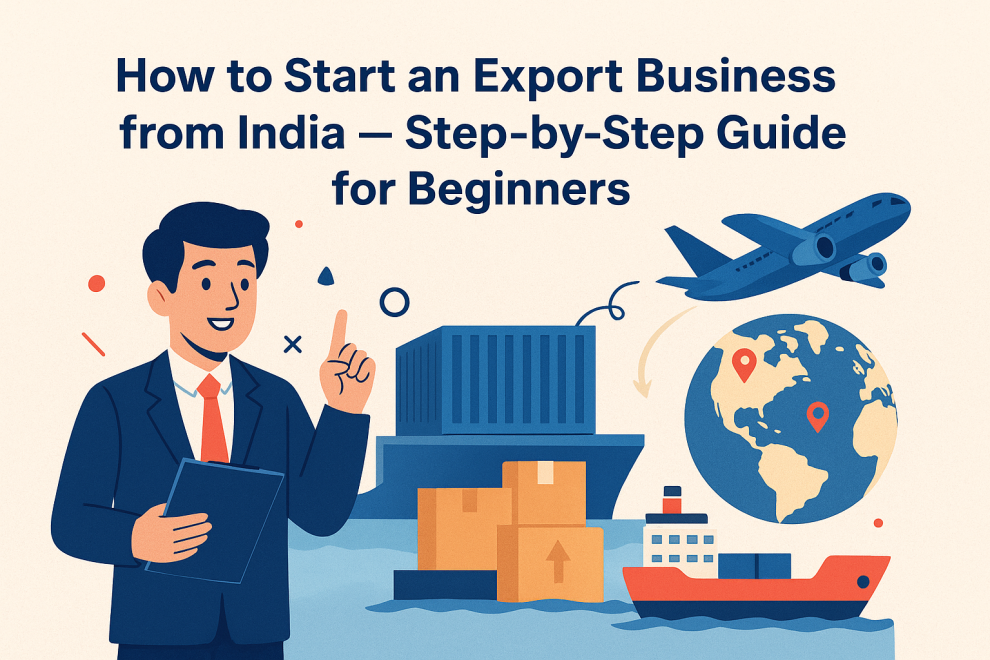

🌍 How to Start an Export Business from India — Step-by-Step Guide for Beginners
India’s export ecosystem is expanding faster than ever before, creating massive opportunities for small and medium businesses to go global. If you’ve ever wondered how to start export business in India, this step-by-step guide will walk you through everything — from registration and documentation to finding buyers and shipping products worldwide. With the right knowledge, even a small business in Bharat can become a global brand.
India exports products worth over USD 770 billion annually (goods and services combined), covering industries like textiles, spices, engineering goods, organic food, and IT. Whether you’re a manufacturer, trader, or startup founder, you can begin exporting with minimal investment — provided you follow the right process.
📦 Step 1: Decide What You Want to Export
Before starting, identify products with consistent international demand. Look for items that are Made in India and have a reputation for quality or authenticity. Conduct basic market research using tools like Trade Map or Indian Trade Portal to check export potential.
- ✅ Handicrafts and traditional art
- ✅ Organic food and spices
- ✅ Ayurvedic and herbal products
- ✅ Textiles, garments, and leather goods
- ✅ Engineering and auto components
- ✅ IT and digital services
Pro Tip: Choose a niche where India already has a production advantage. It’s easier to export products that are already part of India’s strong supply chain.
🧾 Step 2: Register Your Business Legally
To begin your export business in India, you need to legally register your company. You can start as:
- Sole Proprietorship – for individuals
- Partnership or LLP – for small teams
- Private Limited Company – for scaling businesses
Apply for a GST registration and a current account in your company’s name to receive international payments. Having a professional business structure builds buyer confidence.
🌐 Step 3: Obtain Your Import Export Code (IEC)
This is the most critical step in starting your export business in India. The Import Export Code (IEC) is mandatory for all exporters and importers. It’s issued by the Directorate General of Foreign Trade (DGFT).
- 💻 Apply online at DGFT.gov.in
- 🪪 Documents required: PAN Card, Business registration proof, Address proof, Bank details
- 🕒 Processing time: 1–3 working days
Once approved, your IEC is valid for a lifetime. This code allows you to ship goods abroad and receive foreign currency payments.
🏦 Step 4: Open a Current Account and Set Up a Payment Gateway
Open a dedicated current account for your export business with a reputed Indian bank. Ensure the bank supports international transactions and foreign currency receipts under RBI guidelines.
For service exporters (IT, freelancing, digital marketing, etc.), you can use platforms like Payoneer, Wise, or RazorpayX to receive payments globally.
📄 Step 5: Register with Export Promotion Councils
Every product category in India has a dedicated Export Promotion Council (EPC) to help exporters with market access, trade fairs, and incentives. Joining an EPC boosts credibility and provides exposure to foreign buyers.
- 🏭 Federation of Indian Export Organisations (FIEO) – General exporters
- 🍃 APEDA – Agricultural & Processed Food
- 💎 GJEPC – Gems & Jewellery
- ⚙️ EEPC India – Engineering Goods
- 💊 Pharmexcil – Pharmaceuticals
🚢 Step 6: Understand Export Documentation
Proper documentation ensures a smooth export process. Here’s a list of essential export documents required in India:
- 🧾 Commercial Invoice
- 📦 Packing List
- 🚢 Bill of Lading or Airway Bill
- 🏦 Bank Realisation Certificate (BRC)
- 📃 Certificate of Origin
- 📑 Shipping Bill (Generated via ICEGATE)
Each document helps in customs clearance, insurance, and payment verification. Always maintain digital copies for compliance and audit purposes.
🌎 Step 7: Find International Buyers
Finding reliable overseas buyers is the key to success. You can use several B2B platforms and government-backed resources to connect with importers globally.
Additionally, attending international trade fairs, virtual B2B meetings, and buyer-seller summits helps in building strong business relationships.
💰 Step 8: Decide Payment Terms and Incoterms
To avoid payment issues, it’s important to fix clear Incoterms (International Commercial Terms) like FOB (Free on Board), CIF (Cost, Insurance, Freight), or EXW (Ex Works). Always insist on advance payment for first orders.
- 100% Advance Payment – Best for new exporters
- Letter of Credit (LC) – Secure for high-value shipments
- Document Against Payment (DP) – Payment after goods dispatch
🚚 Step 9: Manage Logistics and Shipping
Once the order is confirmed, you’ll need to coordinate with freight forwarders or shipping companies. They’ll help manage container booking, customs, and insurance. You can use platforms like Freightos or local logistics agents for competitive rates.
- 📦 Choose between Sea, Air, or Courier mode
- 🛃 File Shipping Bill via ICEGATE Portal
- 💸 Ensure export payment realisation within RBI time limits
🏆 Step 10: Avail Export Incentives and Schemes
The Government of India offers several incentives under the Foreign Trade Policy to boost exports. Some major schemes include:
- RoDTEP Scheme – Refunds duties and taxes on exported goods
- Export Credit Guarantee Corporation (ECGC) – Insurance for exporters
- Export Promotion Capital Goods (EPCG) – Duty-free import of machinery for export production
- MSME Export Support under RAMP & District as Export Hub programs
👉 Learn more at the official DGFT website.
📈 Step 11: Promote Your Export Business Online
In the digital era, having an online presence is non-negotiable. Create a professional website showcasing your export-ready products, certifications, and testimonials. Use LinkedIn, Facebook, and WhatsApp Business to reach global buyers directly.
💡 Pro Tip: If you already have a product catalog, convert it into an online export store using WooCommerce or Shopify for global reach.
🔥 Join the Entrepreneur Foundation Community!
Be part of India’s most vibrant Entrepreneur Network. Access Training & Workshops, attend Business Events, and connect with like-minded Founders driving growth from Bharat to the World.
🔚 Conclusion
Starting an export business from India is easier than ever before — thanks to digital trade platforms, government incentives, and global demand for Indian goods. Whether you’re exporting handicrafts or software, following this step-by-step guide on how to start export business in India will help you get started with confidence.
Begin small, stay compliant, and focus on building long-term buyer relationships. With consistency and the right strategy, your business can truly go global from Bharat.
❓ FAQs on How to Start Export Business in India
Q1. What is the minimum investment to start an export business in India?
Ans: You can start with ₹50,000–₹1,00,000 if you already have products to export. The major costs include IEC registration, packaging, and logistics.
Q2. Is IEC mandatory for export?
Ans: Yes, IEC (Import Export Code) issued by DGFT is compulsory for every exporter in India.
Q3. How do I find buyers for my export products?
Ans: Use B2B portals like Alibaba, IndiaMART, TradeIndia, or participate in trade fairs organized by Export Promotion Councils.
Q4. Which products are best for export from India?
Ans: Spices, handicrafts, garments, organic food, and engineering goods are among the top export products.
Q5. Can a small business start exporting?
Ans: Absolutely. MSMEs and even home-based entrepreneurs can start exporting using online platforms and EPC support.


Add Comment